A buyer's agent working an Inverness contract this summer did what every agent in Cook County does when a septic question comes up. She called the Cook County Department of Public Health. The person on the phone had no file, no permit history, nothing. The property wasn't missing from the system. It was never supposed to be in that system in the first place.
Inverness is one of four incorporated communities in Cook County that runs its own septic ordinance instead of routing private sewage system review through the county health department. The others are Barrington Hills, Palos Park, and South Barrington. Everywhere else in the county, a buyer or seller who needs septic permit history calls Cook County. In Inverness, that call goes nowhere. The record lives with the village.
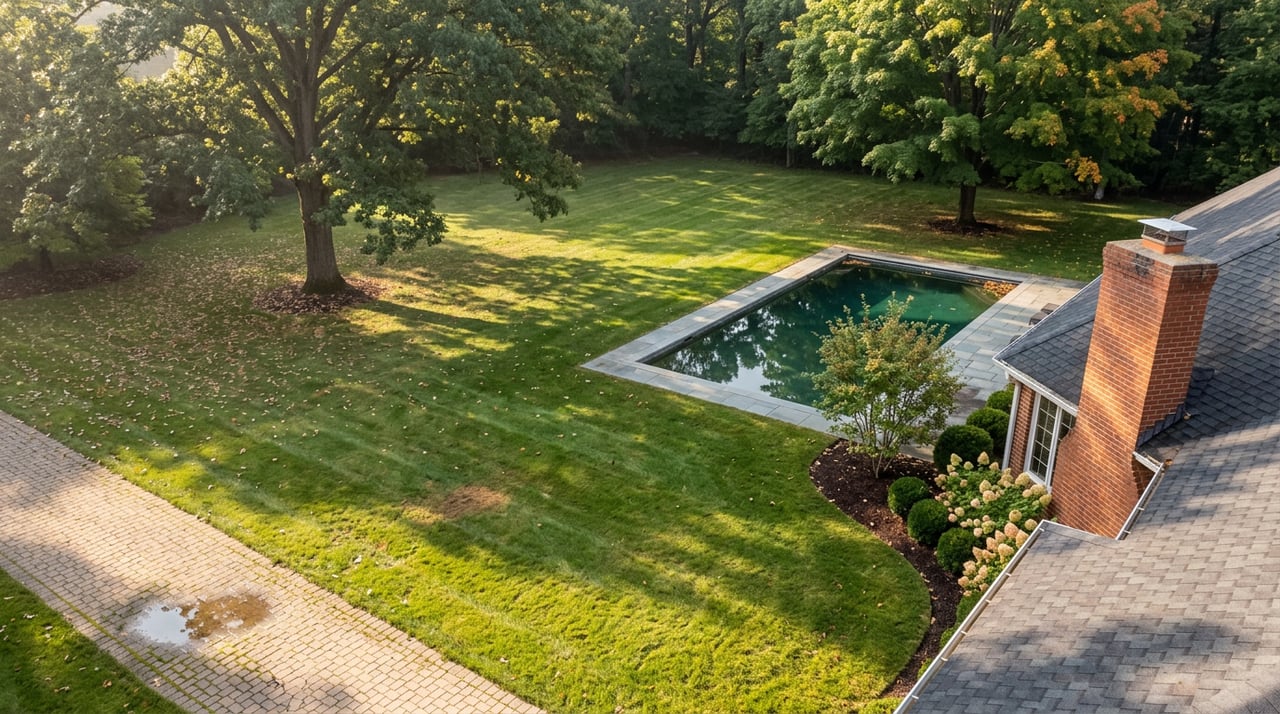
That single jurisdictional fact is easy to miss because nothing about an Inverness listing announces it. The MLS sheet doesn't flag it. The septic riser in the backyard looks the same as one in Palatine. But on an estate lot where the well and septic system are doing all the work a municipal water main and sewer line would do elsewhere, knowing which office actually holds the paperwork is the difference between a septic contingency that clears on schedule and one that stalls a fast-moving contract.
The County Carve-Out, and Why It Exists
Cook County's public health department states plainly that it reviews and approves private sewage disposal systems throughout the county, with an explicit exception for incorporated Barrington Hills, Inverness, Palos Park, and South Barrington, each of which operates under its own IDPH-approved septic ordinance. Inverness codified its version in Title 9 of the village code, which spells out construction standards for septic tanks down to baffle placement and minimum liquid depth, the same technical detail a county ordinance would cover, just administered locally instead.
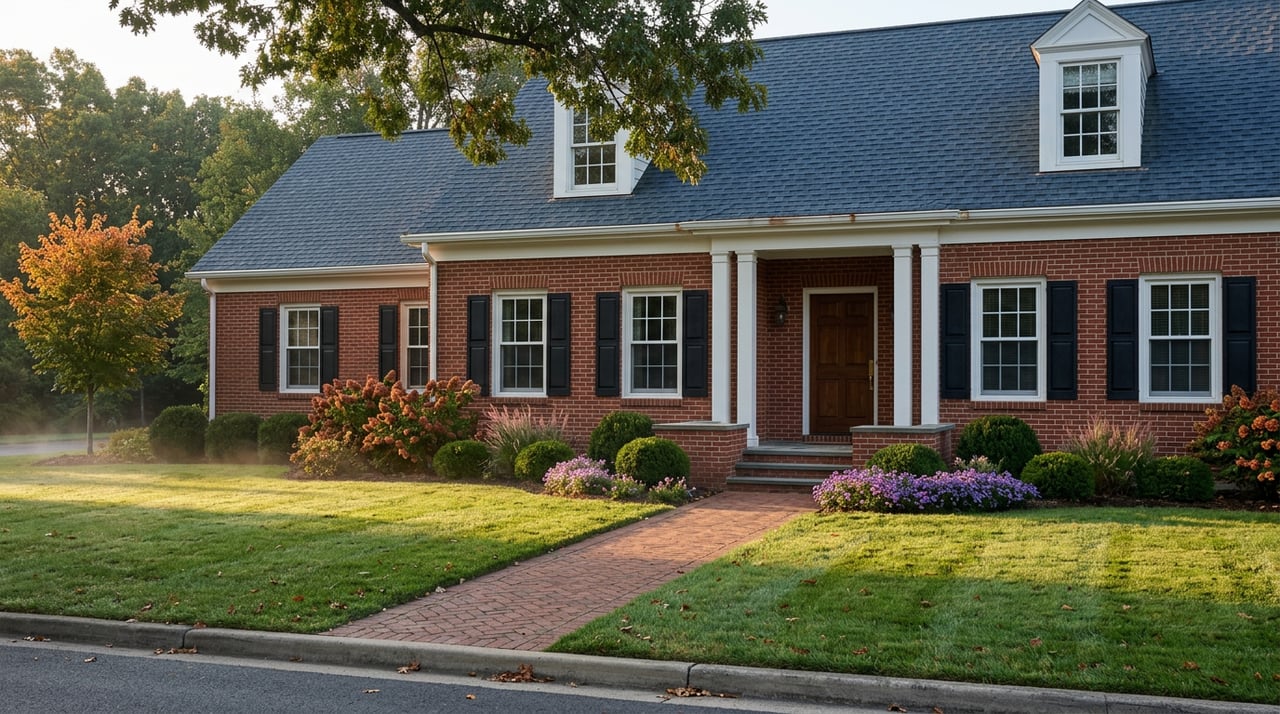
The reason traces back to how Inverness was built. Developer Arthur T. McIntosh laid out the land as a retreat modeled on the Scottish Highlands, letting the roads follow the natural topography rather than a grid, after early settler George Ela first arrived in the area in 1836. That approach produced large parcels rather than a tight grid, and municipal water and sewer lines never got extended across most of the resulting village, because the lot sizes never called for the density that makes a shared utility system practical. The result is a community where, as local real estate descriptions consistently note, homes on an acre or more are the rule rather than the exception, spread across long-established subdivisions like McIntosh, Baldwin Hills, and Chippendale. A village built on private wells and septic systems for the better part of a century has good reason to write its own maintenance rules rather than waiting on the county to do it.
It's worth being precise about the boundary here. Barrington Hills, the unincorporated large-lot community next door, has the same kind of carve-out. The Village of Barrington itself does not. Downtown Barrington is on municipal water and sewer, and a septic question there routes through the normal county channel. If you're comparing a listing that says "Barrington schools" or "Barrington area" against one that's actually inside Inverness or Barrington Hills, the utility picture and the permitting authority can be completely different even though the address looks similar.
The Mailing Address Problem Is Older Than the Septic Question
This isn't the first time an Inverness address has confused people about which authority is actually in charge. The village has never had its own zip code or post office. Roughly 20 percent of Inverness, including the Braymore Hills subdivision, gets mail routed through the Barrington post office, while the remaining 80 percent runs through Palatine. Braymore Hills' own homeowners association tells residents to use the zip+4 code specifically so postal routing doesn't misfire.
The same instinct that makes a resident write "Barrington" on an envelope can make a buyer or their agent assume Cook County handles everything administrative about the property, including septic. It doesn't. The permit history, the inspection record, and the compliance file for a septic system in Inverness sit with the Village of Inverness Building Department at 1415 Baldwin Road, not with the county, and not with whichever post office happens to deliver the mail.
What This Means If You're Listing This Fall
Inverness has not been a slow market this year. The median sale price ran near $879,000 as of May 2026, up about 12 percent from the prior year, and homes here were going under contract in about two weeks as of June 2026. A property here that's priced and presented correctly can move fast.
That speed is exactly why a documentation gap is expensive. A buyer moving quickly on a well-priced estate lot doesn't want to spend the second week of their contract waiting on a phone call to an office that doesn't have the file, and then a second phone call to find the right one. Every day spent locating the right permit is a day borrowed from an already tight closing calendar.
Before listing an Inverness property with a private well and septic system, a seller is in a stronger position with the following gathered ahead of time:
- Permit and installation history from the Village of Inverness Building Department, not Cook County
- The most recent septic pumping receipt or service record, even a partial one, since a septic contractor or the village may hold records the seller no longer has
- A current professional septic evaluation completed before listing rather than during the buyer's contingency period, so any issue surfaces on the seller's timeline instead of the buyer's
- A recent well water test covering bacteria and nitrates, since this is the panel most lenders ask for regardless of loan type
A septic evaluation is typically bookable within a week or two once a licensed inspector is engaged. Well water lab results usually take several business days, and a failed bacteria test means shock-chlorinating the system and retesting, which adds another week or more. Building two to three weeks of cushion into a listing timeline, before the property ever goes live, keeps a fast contract from stalling on paperwork that could have been pulled in advance.
What Buyers Should Ask For
Illinois law requires a residential seller to certify in writing whether they have any knowledge of problems with their on-site septic system. That certification is only as good as what the seller actually knows, which is why a documented pre-listing inspection carries more weight than a disclosure form alone.
Loan type changes what a lender will require. FHA, VA, and USDA files typically call for a water test and a minimum distance between the well and the septic system before they'll clear the file. Conventional loans often skip both unless something in the inspection raises a flag. A buyer financing with a government-backed loan should confirm early which office holds the permit and setback records for an Inverness property, since that's the document a lender's underwriter will eventually ask to see, and it's a document Cook County can't produce for this particular village.
If you're buying or selling in Inverness, the first call about a septic system isn't to the county. It's to the Village of Inverness Building Department at 1415 Baldwin Road. That's not a small distinction. It's the whole answer.
This is the kind of detail that separates a listing that moves cleanly from list to contract in the two weeks Inverness is currently seeing from one that loses a buyer to a slower, better-prepared competing offer. On a market where estate-lot inventory is limited and pricing has kept climbing, a clean paper trail is part of what makes a home feel ready to close rather than ready to negotiate down.
A Few Direct Questions
Does every subdivision in Inverness use well and septic, or are some on municipal utilities? Most of the village's established large-lot subdivisions were built before municipal extension made sense for the density, so private well and septic is the norm across Inverness. Some newer or gated developments closer to municipal lines may differ, which is worth confirming property by property rather than assuming based on the subdivision name alone.
Is Barrington Hills the same jurisdiction as Inverness for septic purposes? Both operate their own IDPH-approved ordinance rather than routing through Cook County, but they are separate municipalities with separate permit files. A record for a Barrington Hills property won't be on file with the Village of Inverness, and the reverse is also true.
What if my lender requires a water test and my closing date is close? Start the well water test as early as possible in the contract period. Lab turnaround for bacteria and nitrates typically runs several business days, and a failed result requires treatment and a retest, which can add a week or more to the timeline if it isn't caught early.
If you're weighing a purchase or a sale on one of Inverness's estate lots, the paperwork side of the transaction deserves the same attention as the house itself. Ashlee Fox works this market directly, from knowing which office actually holds a property's septic history to pricing an estate lot correctly against what's moved in the last few months. Reach out through ashleefoxre.com/contact or request a market consultation to get ahead of the details before they slow down your closing.